 Sottiq
Job interview questions: the 15 most common and how to answer them
For each question: what the interviewer really wants, and how to build a short answer based on your own background.
Introduction and motivation questions
1. Tell me about yourself
What the interviewer wants: a clear thread between your background and the role, in two minutes.
How to answer: present, past, future: what you do today, two experiences that matter for this role, then why this role is the natural next step. Don't recite your resume.
2. Why do you want to work here?
What the interviewer wants: proof that you know the company and chose it on purpose.
How to answer: name something specific (a product, a project, a value stated in the job posting) and link it to what you are looking for. One concrete sentence beats three compliments.
3. Why this role?
What the interviewer wants: a match between the responsibilities and your skills.
How to answer: pick two or three responsibilities from the posting and show, for each, something similar you have already done.
4. What are your strengths?
What the interviewer wants: qualities useful for the role, backed by facts.
How to answer: choose two qualities the posting asks for and support each with a measurable or verifiable example.
5. What is your greatest weakness?
What the interviewer wants: self-awareness and the ability to improve.
How to answer: a real area for improvement, not central to the role, then what you are concretely doing about it.
Questions about your experience
For these behavioral questions, the STAR method keeps you clear: the Situation (context in one sentence), the Task (what was expected of you), your Actions (what you did) and the Result (ideally with numbers).
6. Tell me about a project you are proud of
What the interviewer wants: your actual role, your decisions and their impact.
How to answer: use the STAR method (see below) and stress the "I": what you decided and did, not just the team.
7. Describe a difficult situation or a conflict
What the interviewer wants: how you handle pressure and disagreement.
How to answer: a real case, told without blaming anyone, with the action you took and what you learned.
8. Tell me about a failure
What the interviewer wants: honesty and what you learn from mistakes.
How to answer: a failure you own, its cause, what you fixed and what you do differently since.
9. How do you work in a team?
What the interviewer wants: how you fit in a group: listening, helping, communicating.
How to answer: describe a specific team, your role and an example where you helped a colleague or unblocked a situation.
10. How do you prioritize your work?
What the interviewer wants: how you stay organized when everything is urgent.
How to answer: your method (impact, deadline, dependencies), then an example where you had to make a trade-off and explained it to your manager.
Questions about the future and the offer
11. Where do you see yourself in five years?
What the interviewer wants: your ambition, and whether you might leave soon.
How to answer: a realistic path that fits what the company can offer: skills to deepen, responsibilities you aim for.
12. Why are you leaving your current job?
What the interviewer wants: a positive motivation, with no criticism of your employer.
How to answer: talk about what you are looking for (a new challenge, a field, a team size), not what you are running from.
13. What are your salary expectations?
What the interviewer wants: whether you fit the budget and know your market value.
How to answer: a range based on the market for this role and location, stated calmly, adding that the whole package matters.
14. Why should we hire you?
What the interviewer wants: a summary of what you bring that other candidates don't.
How to answer: three short arguments taken from the posting, each tied to a past success. This is your closing: prepare it word for word.
15. Do you have any questions for us?
What the interviewer wants: genuine interest in the role.
How to answer: always have two or three ready: the first assignment, how success will be measured, the team, the next steps of the process.
Prepare your answers with Sottiq
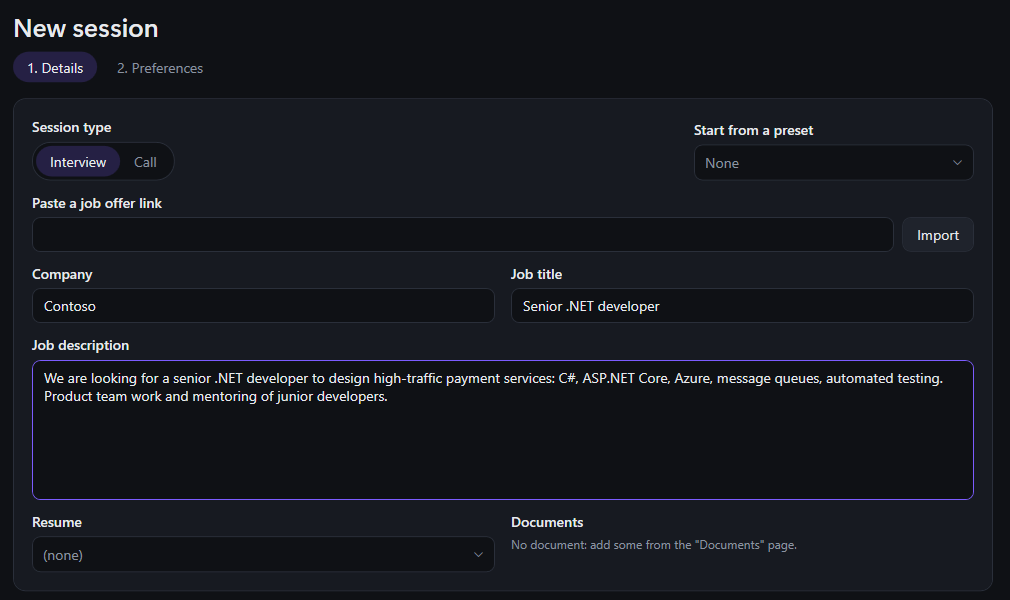
The best preparation is to tie each question to your experience and to the words of the job posting. That is what Sottiq does: paste the posting link and add your resume, and the app extracts the role, the expected skills and your background.
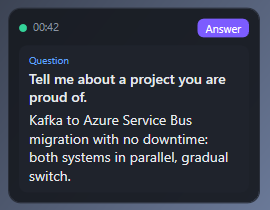
During the video interview, Sottiq transcribes the call, spots the question and shows a short answer idea based on your background, in a small window only you can see. You answer in your own words. After the call, the notes list the questions asked and your answers, to prepare the next round.
Frequently asked questions
How many questions should I prepare before an interview?
At least your introduction, your motivation, two or three project stories told with the STAR method, your salary expectations and your own questions. Most other questions can be answered with those same stories.
Should I memorize my answers?
No, except your "why you" closing. Remember the ideas and key numbers of each story instead: a recited answer sounds fake.
Does Sottiq answer for me?
No. Sottiq shows short ideas drawn from your resume and the job posting; you do the answering. Follow the interviewer's rules and tell the other participants you are transcribing the call when the law requires it.
Try Sottiq on your next call
30 minutes of calls free, no credit card. Then €20 a month, cancel anytime.
Download Sottiq for Windows